
Kunitsu-Gami: Path of the Goddess review
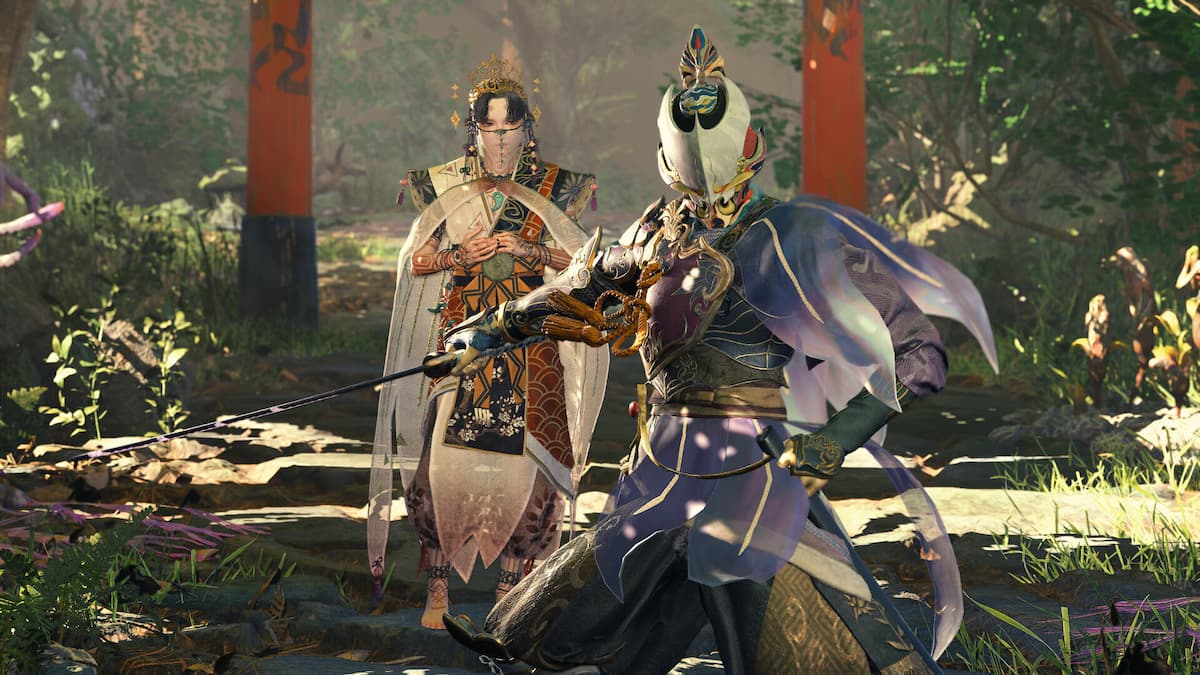
There’s trouble afoot on Mt. Kafuku, home of the beautiful Goddess. An evil presence has materialised, and it’s brought with it a black, defiling substance that has turned its once lush land into something unrecognisable. It’s affected those who reside on the mountain, too, trapping them. The Maiden Yoshiro isn’t going to simply give up, however. With the help of her guardian, Soh, she’s going to work her way down the mountain, clearing it of defilement as she goes. And so begins Kunitsu-Gami: Path of the Goddess, one of the most unique titles we’ve played this year.
An action strategy game, Kunitsu-Gami: Path of the Goddess is probably quite unlike anything else you’ve played. And that’s a good thing. Stage-based, you make your way down Mt. Kafuku, overcoming challenges as you go. Though while there is a standard formula for the majority of the game’s stages, there are also boss fights, some stages that throw curveballs and a fair amount of base management to keep you on your toes.
The core premise of Kunitsu-Gami: Path of the Goddess finds you clearing locations of defilement. Starting during daylight, to do that you’re required to guide Maiden Yoshiro through one or more torii gates, a process that requires gems. And how do you get gems? Well, initially from cleansing the area from certain types of defilement yourself, and then by defeating enemies that emerge from Torii gates when day turns to night.

It’s during the night that Kunitsu-Gami: Path of the Goddess really comes to life, with a wide range of excellently designed demonic enemies called Seethe emerging to try and claim Maiden Yoshiro’s life. Needless to say, as the sword-wielding guardian Soh, it’s up to you to defend her. Thankfully you’re not alone, or at least you don’t need to be. During the daytime, each stage has numerous villages for you to rescue from defilement, and then you can assign them roles using gems to help you fight during the night.
Initially only the basic woodcutter role is available, fighting with axe in hand. As you make your way down the mountain and collect masks containing the power of the Goddess, however, more roles become available. Eventually you can turn your villagers into Archers, Sumo Wrestlers, Thieves, Shaman Healers, and more. Each has their own role to play, and it’s up to you to guide them and put them to good use. Fail to do that, and the Seethe might just overcome you.
Not only do you need to worry about your own combat performance in Kunitsu-Gami: Path of the Goddess, then, but you also need to be aware of the status and positioning of your loyal villagers. Thankfully you can pause the action at any time and easily issue commands to them, though it’s a shame that some of the most basic commands such as summoning them all to your position are locked until you’ve made significant progress in the game. Still, you quickly get used to the limits of the system, and it’s never too hard to effectively make use of the manpower available to you.

It’s not just during the night that the villagers prove useful, either. During the day you can instruct them to perform valuable tasks such as restoring defences in the area, and removing obstructions to allow you to access blocked paths. The former is particularly important as a demon-halting gate or a platform that gives your archers increased range can make all the difference when the seethe attack. In areas like dark caves, your villagers can also be commanded to ignite lights in the area, important for simply being able to see.
Related: The best single-player games on PS5
Of course, as you progress through Kunitsu-Gami: Path of the Goddess, the stages get more complex. Eventually you’ll find yourself up against a wider variety of Seethe, for example, each dangerous in their own way. They’ll emerge from numerous torii gates, too, forcing you to protect Maiden Yoshiro from multiple angles. Throw in a number of stages that mix the formula up a little, like engaging in battle out at sea or freeing Yoshiro from demonic possession, and you have a game that keep you on your toes.
Thankfully there are numerous ways to improve the abilities of your villagers, and Soh, allowing you to better combat the Seethe should you put in the the time. Using a resource called Musubi, things like the health and attack power of your villagers can be improved, and they can even learn new skills. Soh, on the other hand, has an even wider range of upgrades that can be acquired, ranging from additional command options for the villagers, to unlocking extra slots for relics that provide perks.

Those who want to maximise their time with Kunitsu-Gami: Path of the Goddess, and also make their forces as formidable as they can be, will want to return to stages as they progress. Firstly, many completed stages can be returned to in Base mode, allowing you to repair the structures within them. For doing so, you’ll be rewarded with Musubi and a whole lot more. You can also replay each stage, battles with Seethe and all, in order to complete optional objectives, many of which can’t be completed until you’ve unlocked additional masks and suchlike.
Ultimately, the variety found within Kunitsu-Gami: Path of the Goddess proves to be one of its greatest strengths. The day and night cycle of its typical stages force you to think and act fast, and excellently balance both action and strategy. Add in epic boss battles, laid-back base management elements, and other unique scenarios along the way, and you have a game that constantly delights and surprises.
Kunitsu-Gami: Path of the Goddess Review
We like…
- Sublime enemy design
- Varied gameplay that keeps you on your toes
- Wonderful soundtrack
We don’t like…
- Keeps some basic features locked until you've made substantial progress
This review of Kunitsu-Gami: Path of the Goddess is based on the PS5 version, with a code provided by the game’s publisher. It’s available on PS4, PS5, Xbox One, Xbox Series X/S, Switch 2 and PC.


