
Half-Life 2: The sequel that almost wasn’t, and how Half-Life 3 may never be

Half-Life 2 is officially twenty. That sentiment is enough to make a whole generation of gamers’ joints creak in exasperation. It’s old enough to vote, to drive a car, even eligible to pay tax, but is it considered retro? In terms of entropy, yes, but for many Half-Life fans, it may be hard to consign it to history for the glaring lack of closure. There’s that sense of unfinished business with it, after delays to DLCs, eventual cancellation, and then… nothing for years. And then, when Half-Life did get a new addition in 2020, it was a prequel.
Half-Life 2 isn’t just any game, either. If you haven’t played it, you should, along with its predecessor, as both are masterclasses in game design. Half-Life 2 pushed boundaries as it blended storytelling, innovative gameplay, and technological innovation into a seamless and incredible experience that has rarely been matched since.
Valve, the developer behind it, wasn’t resting on its laurels when it came to making a sequel to their debut smash-hit. It’s a phenomenal game that holds up well even 20 years later, and was lauded with over twenty Game of the Year awards and plenty of nominations on top of that. It also sold a fair bunch of copies: over twenty million to date.
Years after the events of the first game, silent protagonist Gordon Freeman is thrust into a dystopian future where Earth is ruled with a boot to its neck by an alien force known as the Combine. This bleak yet compelling world was built using the Source engine, which introduced much-improved facial animations and realistic physics, which became integral to the gameplay. There was something akin to pure joy to take a five-minute break from sparking a revolution to whip out your Gravity Gun and just mess about.
But in the documentary released to celebrate the game’s birthday, Valve spilled the beans on quite a turbulent development. From how Half-Life 2 almost didn’t make it to never-before-seen details of that cancelled third DLC episode, and an update regarding the status of the now-fabled Half-Life 3, here’s what we learned from the documentary.
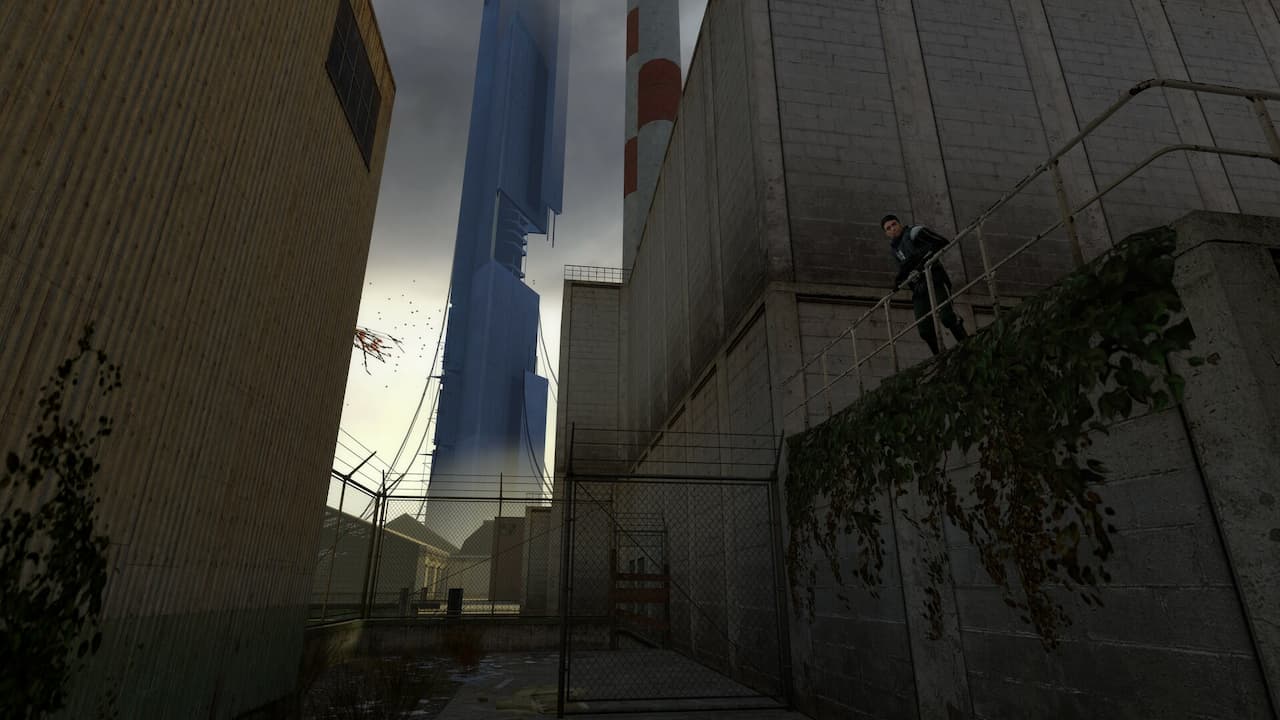
The sequel that almost wasn’t
There’s a lot of cool insight in the documentary that fans of the game or development enthusiasts will find interesting, such as how the physics was painstakingly created, how the Ant-Lion segment was essentially ‘the floor is lava’ brought to life, and the unlikeliest of places where they found the models for the characters’ faces.
But the real interest is to be found in what was going on around the game’s development, and how while the team was insulated from a lot of it, right up until the game’s release they felt like they were constantly having to look over their shoulder — waiting for Gabe Newell to tell them to pack up and go home because it was all over.
Karl Quackenbush, Valve’s attorney, gives the details on how Vivendi almost wiped out Valve. They acquired Sierra not long after the release of Half-Life and inherited the international distribution rights for retail. That’s the key point here: retail meant physical copies sold in stores. But alongside Half-Life 2, Newell and Valve had another idea cooking in the oven: a digital platform for selling games, which would eventually become known as Steam. You may have heard of it.
Valve sought clarity over this, which caused a dispute that eventually ruled in their favour, but Vivendi wasn’t happy about it. This was at a time when publishers had all the power and developers were pretty much told what to do. So Vivendi came back with a brand-new and much bigger legal team and a whole stack of counterclaims against Valve, seeking the rights to the Half-Life intellectual property and many other things.
Process servers were turning up at the development team’s houses in the middle of the night, issuing subpoenas. In Quackenbush’s words, this was Vivendi going personal in order to intimidate. They wanted to drown Valve in so much paperwork and lawyers’ fees that it would not only bankrupt the company but also Gabe and his wife as well.
And then things went from bad to worse.
When Half-Life 2 was revealed to the world at E3 2003, it couldn’t have gone down any better. The team thought they had a real winner on their hands and suddenly felt a lot more optimistic despite everything going on outside of the game. The smiles didn’t last long, however, when a few months later, a new problem struck the company.
Newell’s brother had a company that was winding down, and thanks to some lax security updates, some of that company’s servers were vulnerable and sitting under the same firewall as Valve’s. A German hacker was able to exploit their way in and make out with the source code to Half-Life 2, and it wasn’t long before it was all over the internet.
It was a gut punch to the team. All that work they’d put in, and now a very, very rough and unfinished cut of the majority of the game was out there for all to see. The hacker was soon apprehended in Germany, as it turned out they were guilty of hacking a few banks as well. And while it’s debatable just how damaging it was to the game in the long run (it still sold gangbusters, remember), at the time, it was the morale hit that was hard to take for the team; to them now, the game’s success was on a knife-edge.
While the hack was pretty much a bow that tied itself, the legal battle would drag on for pretty much the entire course of the game’s development cycle until it reached its conclusion. Newell had a lot of personal capital to keep the studio going, but even that started to dwindle.
When they sourced funding from elsewhere, Vivendi got wind and turned the screws tighter. But it all came to a head thanks to one man. No, not Gordon Freeman, but a young intern called Andrew.
When Valve requested documentation on what Vivendi was up to in Asia, they responded by sending them a lot of documentation… in Korean. It was another ploy for wasting time and money, and Newell knew that they would likely be fruitlessly searching through emails and documents just to learn that they ‘ordered sandwiches again’. It was a case of finding a needle in a haystack.
Thanks to Andrew they found it.
As a native Korean speaker who majored in Korean Language Studies at the University of California, he had the job of sifting through the thousands of pages, and just so happened to come across an email sent between vice presidents which declared “we destroyed those Valve documents like you asked”.
At that point, it was an open-and-shut case. Vivendi didn’t have a leg to stand on, and now it was just a matter of settling damages to Valve. But Newell was mad, and he made sure he would get every cent. Half-Life 2 was released in November 2004 to rapturous fanfare and a fair few quid, launching Steam along with it, which went on to become the powerhouse of the digital sales platform it is today.
But what was next for Half-Life?
Valve is its own worst enemy
With Half-Life 2’s cliffhanger ending and tumultuous development, the team decided to move forward with episodic content. They could deliver smaller, well-crafted expansions with the tools they already had and were well familiar with and finish out the story.
There was just one problem: the expectations Valve had set itself in pushing the boundaries. Each episode had to do something new and exciting, or introduce a new mechanic. That put the team under huge pressure and crunch to deliver, and soon these short development cycles started to bloom, and release deadlines were missed. And, with the gut-punch cliffhanger that Episode 2 left us on, we would never see a continuation of that story because of those expectations.
Episode 3 was being developed, and in the documentary, we see behind the curtain what it was shaping up to be. Set in a snowy locale, it featured an ice gun that could throw up walls to protect from incoming fire or shoot out an Ice-Man-like track that would allow players to traverse over obstacles in their environment.
But to the team, it didn’t feel like it was pushing the boundaries enough. At the time, Valve was also developing Left 4 Dead, and eventually, the team was pulled away from Episode 3 to help with that game, never to return to work on Half-Life. By the time Left 4 Dead was done, it was felt that too much time had passed. It was too late.
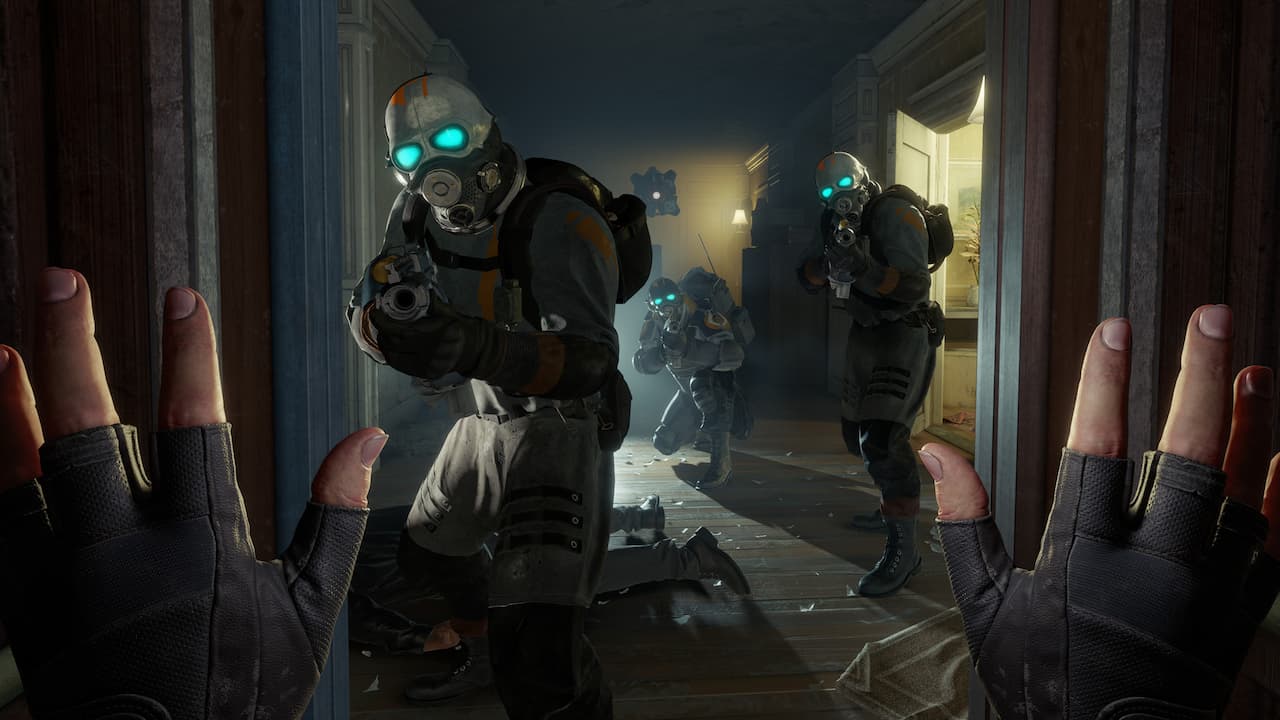
Better late than never
Hindsight is a wonderful thing, though, and as the team reflects on it, they believe they could have gone back. And with the success of Half-Life: Alyx in 2020, bringing Half-Life to VR, there certainly seems to be life in this old dog yet. And if you ask any fan of the series, if you find one that says they don’t want a Half-Life 3, you’ve found yourself a liar.
But will it happen?
Well, depending on whether you’re half-full or half-empty when it comes to your glasses, Gabe Newell’s closing comments will either leave you with a glimmer of hope or consign you to the belief that Half-Life 3 truly is dead in the water:
“The ending of Half-Life Alyx is somewhat a self-critical realisation, so that was super satisfying and all credit to the people who were specifically involved in that decision and those sets of designs.
I think that Half-Life represents a tool we have and promises made to customers to capitalise on innovation and opportunities to build game experiences that haven’t been involved previously, and I think that there are no shortage of those opportunities facing us as an industry right now.”
So, is Half-Life now just a tool serving as a reminder to always strive for innovation, or is there maybe a renewed hunger on Valve’s part to find that elusive next step in the series?
Whatever your takeaway from that, one thing is for sure: Valve is a different breed. For better or worse, it has always had the gamer in mind with what it does, not the company’s bottom line. It has made some seriously good games and made a platform to help launch thousands of others. While we can cross our fingers to see Gordon Freeman again, we can at least appreciate what the company has given us over the past 25 years.
If you want to check out the documentary for yourself and see all the wonderful details that went into making Half-Life 2 (and the nitty-gritty of all the drama surrounding it), you can watch it on YouTube here.


