
Whatever happened to the movie tie-in video game?

Anyone above a certain age will be familiar with the concept of a movie tie-in. These video games offered interactive versions of their big-screen counterparts, developed to release alongside them. If a movie was a big blockbuster, chances are you’d find a tie-in video game: think Spider-Man, Terminator, Transformers, and, er, ET.
By and large, these games were little more than cash-grabs. They would be rushed productions, largely aping whatever games were popular, whose gameplay loops could be shoehorned into the lore of whichever film was slated for that summer’s release. And as you would expect, the quality of these games would vary from almost passable to absolute cabbage. (There were exceptions of course: Spider-Man 2, you were wonderful.)
Ever since games hit the mainstream, they’ve been pretty synonymous with film tie-in games. Going as far back as 1978 with Superman for the Atari 2600, which coincided with the Christopher Reeve film but was in itself an adaption of the comics, and Raiders of the Lost Ark as the first official movie-licensed game in 1982, just about every big film release had a companion game come with it — right up until it evaporated in the 2010s.
Never going to last?
One argument for the demise of the tie-in is that the bubble was always going to burst eventually, given their consistent lack of quality. These games were often clapped together by either new or small teams on a shoestring budget to maximise the return on investment. It didn’t help that they never had the option of delaying, because these games had to drop alongside the film to capitalise on the buzz.
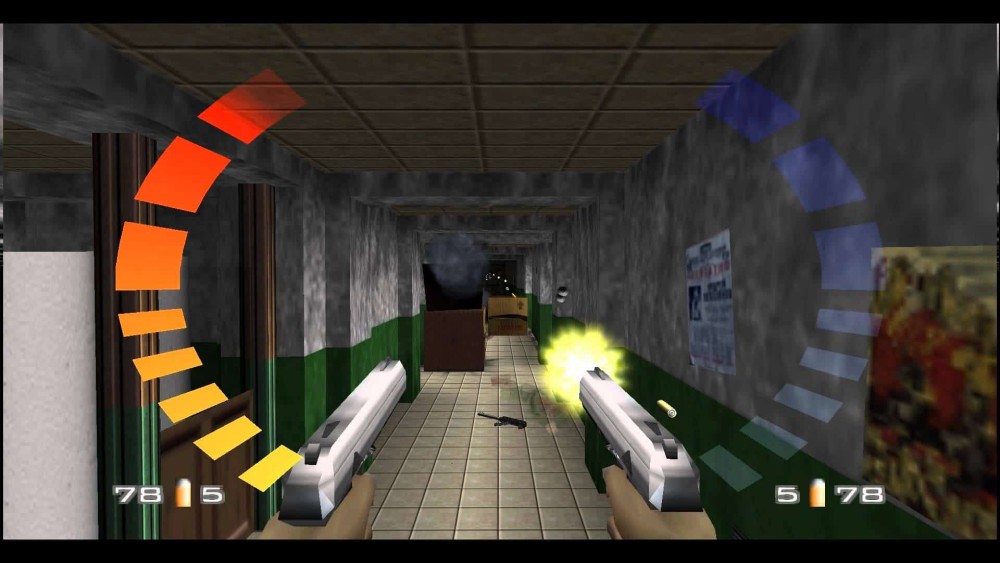
Of course, you could argue that GoldenEye 007 proves this idea wrong when it was released two years after its film counterpart. But GoldenEye only went and redefined an entire genre, and is largely regarded as one of the best games ever made. Not all tie-ins are bad, you see. But most were terrible.
Atari’s ET was released just after Raiders of the Lost Ark, and that has its own infamous story. It was so bad, unsold copies were left in landfills and ended up being the demise of Atari — but that’s quite the story best saved for another time. And yet, the movie tie-in still endured for decades to come.
Sure enough, over the years, we saw shoddy adaptations of Underworld, several Batman and Spider-Man games, Call of Duty clones of Daniel Craig’s 007… and the list goes on.
But as we move to the end of the cycle, we end up with games like Star Trek and Terminator Salvation. And these are probably our best examples of poor quality. Upon release, the former was riddled with bugs, poor AI, and broken mechanics. It was little more than a generic third-person shooter with laughably uninspired voice work from its stars Chris Pine and Zachary Quinto. Even the film’s director, J.J. Abrams, went on record to criticise it. The latter was just a repetitive cover-shooter, incredibly short and didn’t even feature Christian Bale’s likeness, let alone his voice.
In the past, tie-ins had largely been passable, but not only were these two notably under par, they also undersold. And in the twelve years since, we’ve seen very few tie-in games.
So what happened?
Generational problems
Star Trek’s failure is a big indicator of the reason why the tie-in died out. These games were never easy to make, but with the new generation of consoles rolling out in 2013, the big step up in hardware with the Xbox One and PS4 made them even harder. With the likes of Grand Theft Auto V, player expectations went through the roof. Now, players were expecting bigger worlds, better graphics, and top-drawer gameplay. HD visuals aren’t cheap, which meant bigger budgets and longer development times.
Herein lies the problem. Movie tie-ins could not change their deadlines, and while a film typically takes two years to produce, a game would have less than that. Was Star Trek rushed out of the door unfinished and unpolished? Possibly.
Environments, character models, and animations all took longer and cost more. A janky PS2 title could be bundled out with a shoestring budget, but now even the cheapest games were looking like multi-million investments. And for a (most likely terrible) game that would be forgotten about once the film finishes its theatrical run? Suddenly, the rate of return on these games was looking thinner than Peter Crouch. For Hollywood, games were no longer a cheap but effective marketing tool.
But, while the movie tie-in was no longer financially viable as a standalone title, there were still other ways to use these intellectual properties.

Your attention, please
With both the growth of mobile gaming and the release of Grand Theft Auto Online in 2013 and Fortnite Battle Royale in 2017, there was a significant shift in gaming. When it comes to turning points in history, the birth of the free-to-play gaming model is probably the most significant one since the jump from 2D to 3D.
Rather than crafting a one-and-done experience, many studios now prioritise engagement over immersion. Mobile movie tie-ins aren’t about telling a story; they’re about keeping players hooked through daily logins, timers, and microtransactions. And on their phones, players can play anywhere and at any time. Games like Marvel: Contest of Champions or Jurassic World: The Game don’t retell a movie’s plot, but instead drip-feed content over months (or years), ensuring players stay invested long after a movie has left cinemas.
Fortnite is the ultimate model for this. Instead of making full-fledged tie-in games, studios now just drop their IP into Epic’s endless content machine. Darth Vader, Goku, and Spider-Man all exist in Fortnite, detached from their original stories but constantly driving engagement through skins, battle passes, and limited-time events. It’s no longer about enriching the movie experience; it’s about keeping players locked into an ecosystem.
So why invest millions in a game that people will forget in a week when you can just monetise attention? Gaming’s biggest blockbusters aren’t adaptations anymore; they’re live-service cash cows designed to make sure you never stop playing. You only have to look at the difference in attention Rockstar has paid to GTA Online compared to Red Dead, and their vastly different player bases. The money and effort is put where the players are (or are expected to be) now.
It’s an awfully cynical take, but thankfully, this wasn’t the only shift made away from tie-ins. While live service was one prong in this fork in the road, the other is much more optimistic.

Be greater
Thanks to ballooning development times (and budgets), no longer could companies shoehorn in a quick cash grab on the latest upcoming theatrical release. So instead, they simply reinvented themselves, deciding to play the long game with developers and decided to do something original instead. Even making original games was now a huge risk to take, so many looked to established franchises and the huge fan bases attached to them.
The likes of Spider-Man and Batman took a leaf out of their approach to comics, whereby you can have more than one iteration of characters running at once. Take, for example, Marvel’s ‘Ultimate’ universe, which has recently made a triumphant return, and DC’s ‘Absolute’ series, reinventing their key characters in bold new ways. Superman lands in South America, and his cape is made of Krypton’s ashes (kind of). Meanwhile, Batman isn’t rich anymore, but he’s ripped, uses his chest bat as an axe, and now rides a Batmobile Tonka truck, which also doubles as the Batcave.
They’ve done the same with video games, trusting developers to take their characters, and through their passion, create their own iterations of them, free from the confines of following a comic continuity or a film’s plot. The result has been several incredibly successful games in the Arkham series and Insomniac’s Spider-Man, as they’ve had the freedom to think about these stories from a gameplay perspective.
Then there’s the likes of RoboCop: Rogue City and Indiana Jones and the Great Circle, which have taken their characters and simply thought, ‘Why don’t we make a sequel to these films that’s actually good?’
While it seems the traditional movie tie-in may be all but gone, it still lives on in spirit in both standalone and live service games. The likes of RoboCop and Indy show that there’s plenty of life in the licences as long as they’re in the right hands. And yet, when it comes to the latter, the Teenage Mutant Ninja Turtles in Call of Duty just doesn’t quite seem right, but is probably the most likely to come out on top.


