
Dear Bethesda, Responsibility is Not a Reward
Dear Bethesda,
This letter has been a long time coming but it’s time you and I had a talk. I’ve been a fan of your role-playing games for as long as I can remember, so much so that I’m willing to forgive how buggy and crash-prone they can be. I remained unswayed when, in The Elder Scrolls: Daggerfall, my player clipped through the floor and fell into some infinite eldritch abyss. I was not dissuaded when Fallout 3 made my console freeze, again, something that no other game had ever accomplished. It’s a testament to the sheer playability of the Fallout series that, instead of hurling the disc through a window, I got right back on the mutant horse.
But this? This cannot be so easily dismissed.
Matters were brought to a head when I was playing Far Harbor, one of the larger and more impressive Fallout 4 add-ons. I found myself loving its almost Lovecraftian atmosphere and so was determined not to power straight through but instead tackle some of many side quests; and that is how I met Cassie Dalton. She seemed reasonably innocuous at first, an understandably bitter settler who’d seen her family dispatched by various unfortunate occurrences.
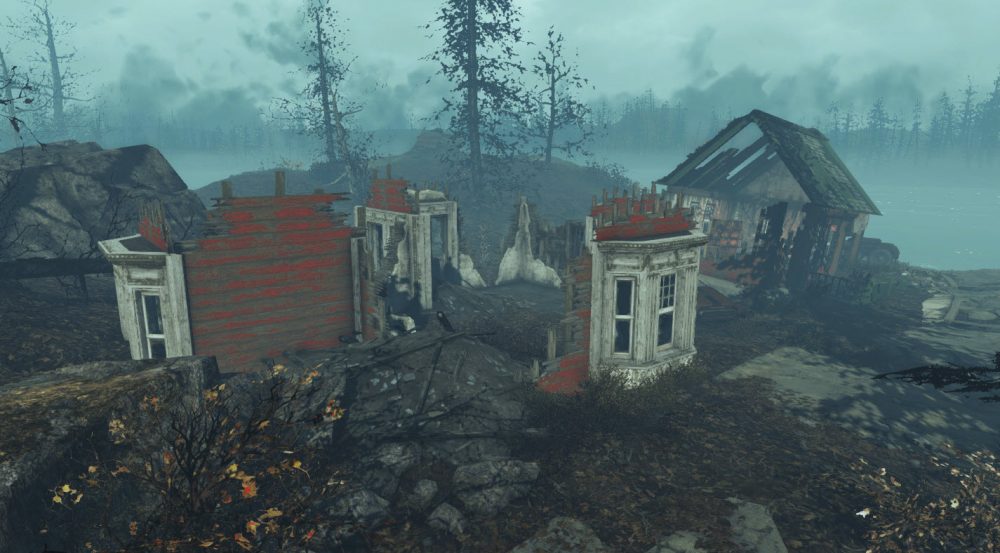
After a brief conversation, I agreed to help her get “revenge” against the island that she believed had wronged her. She was more than happy to pay for my services and so I roamed around Far Harbor, obliterating the creatures she felt had led to her family’s demise. But after I’d dispatched the monstrosity that inhabited her family’s old farm, she dropped this bombshell.
“With that Fog Crawler gone, we can send some folks up there to get the place ready for you.”
Wait, what?
I could scarcely believe my ears. But then the horrifying truth sunk in; she’d decided to reward my assistance by forcing me to run her family’s old farm. And yes, “forcing” is the right word; at no point was I given the option to decline her offer. I know that some people find Fallout 4’s settlement building feature deeply engrossing but I’ve never viewed it as anything but a hassle. And here was Cassie, giving me what she viewed as a grand reward: more responsibility.
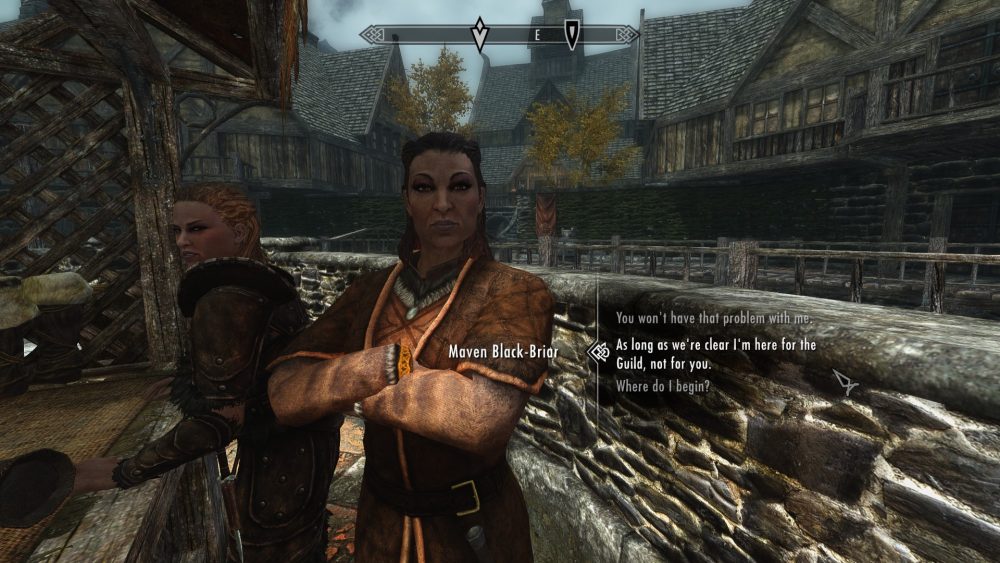
Nor is Cassie Dalton alone in her delusion. While Fallout 4 ups the ante with its settlement crafting feature, you’ve been inflicting this imposition upon players for a long time. Take Skyrim as an example; complete any guild quest chain and you’ll inevitably end up being promoted to leadership of the guild. Every time. On my last Skyrim playthrough, I was in charge of four different organisations, none of whom objected to my multiple roles.
Let me lay it out it for you: Responsibility is not a reward.
I understand that in the real world you may be promoted to a higher position if you excel at your job and that the new position will almost certainly come with additional responsibilities. But, as much as some people may embrace it, the responsibility is not the reward. The reward is typically financial, the additional responsibilities being a requirement of the role; there’d be far fewer executives around if there wasn’t some monetary incentive attached.
Video games are, of course, not the real world. But it’s still a huge misstep to “reward” players of your many role-playing games by putting them in charge of whatever organisation they’ve signed up to. It also makes little narrative sense; do you really expect us to believe that an age-old guild would put their organisation in the hands of someone who’d been around for a year at most?
True, you’re not the only games company to engage in this practice. But you’re by far the worst offender because of how you implement this “feature”, in a manner that is neither rewarding nor entertaining. Firstly, you don’t give the player an out. Short of leaving a guild’s final quest unfinished, there’s no way to decline the “request” that you become the organisation’s leader. Want to hand the reigns to someone else but continue to work for the guild? Tough, it’s the top or nothing, matey.
You’re also ignoring the reasons why players go on quests. I’d venture that few people take on side quests with the sole intent of rising to the top of a particular organisation. Instead, they’re seeking an entertaining and engaging mini-adventure, the reward being the journey itself. Perhaps they’re looking to level up their character or acquire a particularly powerful piece of equipment. It’s far less likely they’re thinking, “Oh boy, pull this off and I get to become the boss of the Thieves Guild!”
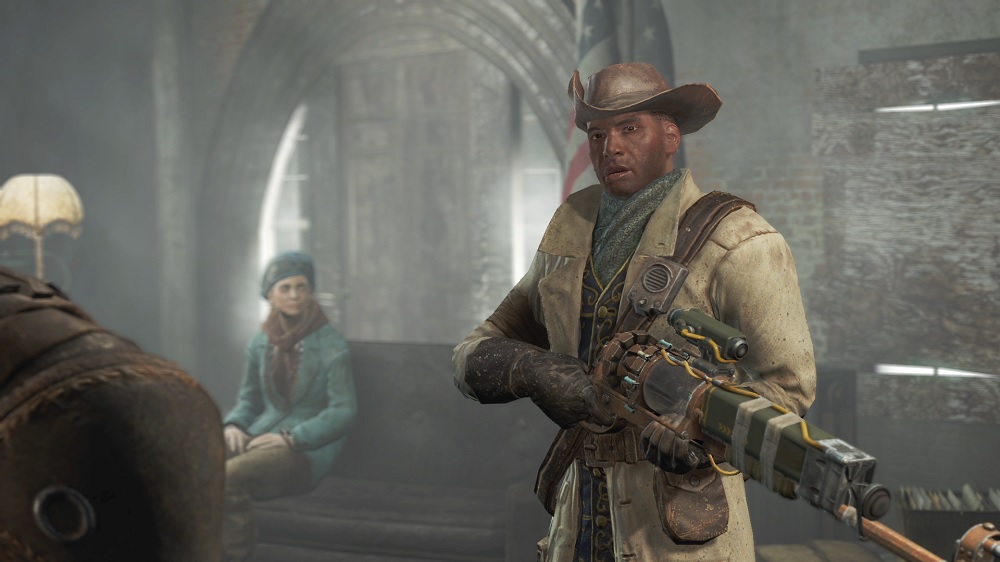
Being “rewarded” with the top job isn’t all it’s cracked up to be, either. Take Fallout 4’s infamous “Minutemen”. Rise to the top of this group of post-apocalyptic protectors and you’d think you’d finally be able to make some grand changes to the wasteland, to choose the direction the organisation takes. Nope – not a chance. Despite being addressed as the Minutemen’s leader, Preston Garvey (who is supposed to be your subordinate) continues to issue you procedurally generated quests.
The same is true of most other guilds or organisations within your games: not once do you get to delegate or make any real decisions. You never feel like you’re in charge, which makes the alleged responsibility you’ve been doled out even more worthless. And while it’s true that the game doesn’t penalise you for failing to check in with these groups, the idea that you’re in charge is a distracting mental itch, motivating you just enough to traipse over to your guild headquarters every while. Where, surprise surprise, nothing has changed.
Your role-playing games have been lauded for their open nature and offer the player a near unparalleled amount of freedom. So why would you imagine that the logical conclusion to their endeavours is to tie them down, even notionally? I can only imagine that at one point, someone piped up with, “Hey, wouldn’t it be cool if you were in charge of…” and, without any real consideration, this became your defacto policy. It makes no more sense than Street Fighter V suddenly declaring you’re going to be managing the fighters rather than playing as them. A Street Fighter management sim might be interesting to some but it’s not what Street Fighter players bought the game for.
So what’s to be done? If you insist on shoehorning this pseudo-leadership mechanic into your games, give the player the opportunity to decline the role. Perhaps, rather than making it automatic, create a quest where you have to prove you’re a better choice than the other candidates (or dispose of the competition). It would then make more sense to issue the player with procedurally generated quests, since they are still working for rather than running the organisation. And if the player does decide they want to be in charge, let them make actual leadership decisions.
It’s been said that if you’re a games developer thinking of implementing a particular feature, you should ask yourself, “Does this make the game fun?” When it comes to “rewarding” people with responsibility, the answer is a resounding no.
Yours faithfully,
Chris
P.S. Any chance of a Morrowind remaster?


