
Is the Playstation 4 Pro for you?
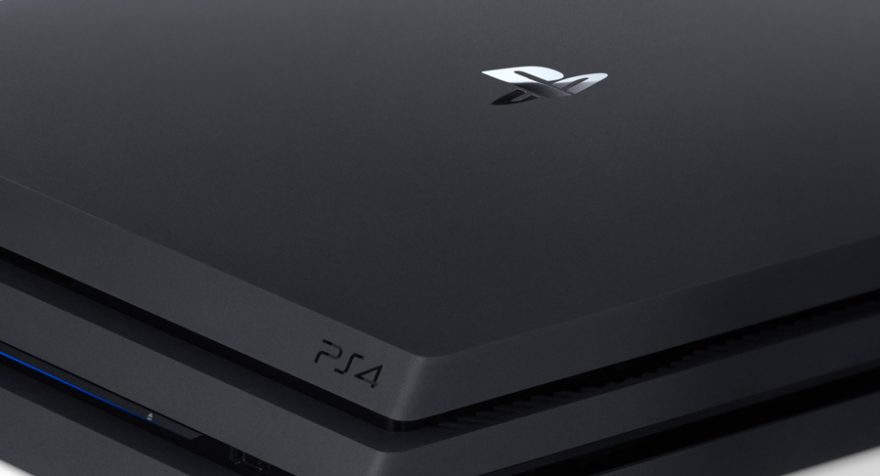
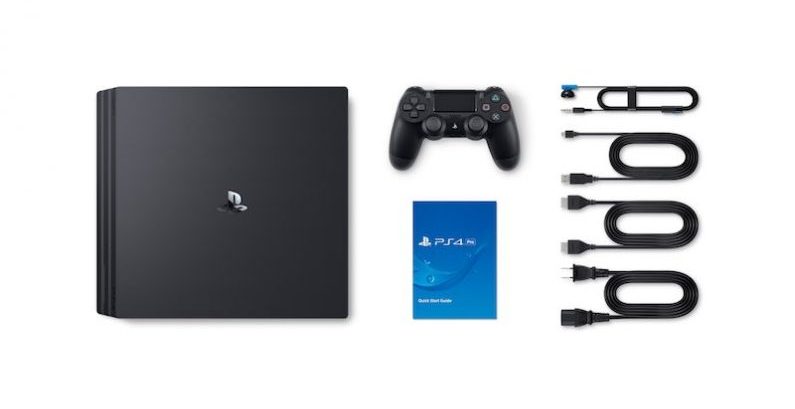
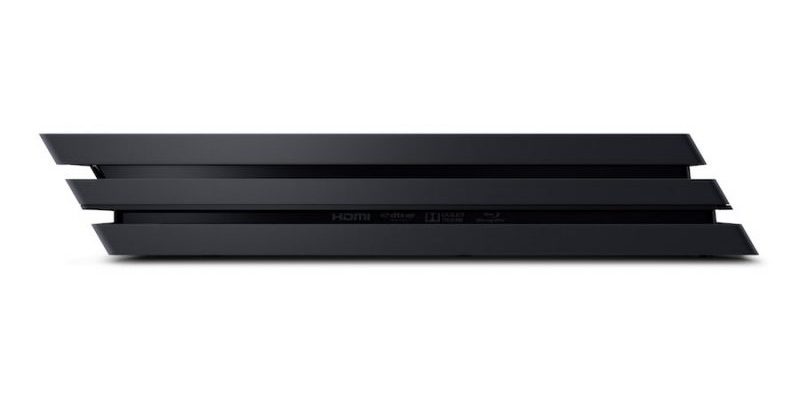
Yesterday Sony formally announced the two newest versions of the Playstation 4; a smaller revision of the current PlayStation 4 and the Playstation 4 Pro. The slim version bears no explanation – a slimmer, sleeker but ultimately the same quality of console as a vanilla PS4. That leaves the Pro which, up until now, was known as “Neo”.
So what exactly does the Playstation 4 Pro do? And, more importantly, should you be thinking about upgrading from a PS4 to this new version of the console? Sony has been advertising the PS4 Pro as the console for gamers “who want to be at the forefront of gaming innovation”. What does this mean? Put simply, Sony is pushing for 4K and HDR gaming. Now, to achieve either of those things you must have a TV that is 4K and HDR ready, but does that mean that those us with a “standard” 720/1080p screen will have no benefit of upgrading? No, but the benefits are much smaller and much harder to pin down as it is entirely up to individual game developers to create these benefits.
4K
As I said earlier, the biggest and most advertised advantage of the PS4 Pro is gaming (and streaming) in 4K. But there is, as with everything, a big but – and in this case, two. First, you need to know what 4K is. Is it 2x better than 1080p? 4x better? Put very basically, 4K has four times the number of pixels as a standard HDTV but is only two times the resolution. It sounds impressive, and it is, the problem for Sony is that 4K is a hard sell; most people can’t imagine the difference between standard HD and 4K but it is there and it is a big one. I would highly recommend if you have the chance to go to a store and see the difference for yourself.
Now, back to those two big buts. First of all, you are obviously not going to be able to play in 4K if you do not own a 4K TV. Most people do not, and that is exactly the point. We are still at a point where manufacturers are trying to convince us to buy a 4K TV. Being able to play games in 4K is a big selling point – and who is one of the biggest manufacturers of high-end TV’s? Sony. Sony is going to make money of the PS4 Pro by selling both the console and the many TVs that go with it. And to those of us sticking with a 1080p TV, I’ll come back to that later.

The second caveat is a little bit of an underhanded one by Sony. While, yes, games will run at 4K resolution, it will often not be true, “native” 4K. At first, this sounds a little disingenous by Sony, hoping that the consumer will not know (or care) about true 4K. You see, Sony have developed an incredibly nifty technique using a “Checkerboard Process.” It’s hard to explain, but a 4×4 block of pixels is instead rendered as two blocks of 2×2, thus only requiring two times a 1080p pixel count. These two seperate blocks are then rendered together and smoothed with an anti-aliasing technique – incredibly fancy interlacing. As stated, hard to explain and hard to understand but you don’t need to. All you, the consumer, needs to know is that while you won’t be gaming at “true 4K” (at least on intensive AAA titles) it will still look a lot more impressive than 1080p.
I say “intensive AAA titles” because some developers, such as Hi-Rez (behind Smite) and Zenimax (Elder Scrolls: Online) have said that their titles will be running at native 4K. While, with the power of the PS4 Pro, this is hard to believe, it may very well be true. We will have to wait and see in the coming weeks as more intricate specifications are released. One thing is for sure though, the highest quality titles – such as Rise of the Tomb Raider, Horizon: Zero Dawn and Mass Effect Andromeda – will not be running at true 4K.
HDR
The second of Sony’s latest big promise is HDR gaming. The immediate problem here being that in a rather unexpected and admirable move by Sony, all PS4s will be receiving HDR capabilities through a firmware update next week. Yes, that means all original Playstation 4s will be able to output the HDR – High Dynamic Range – technique. Again, if you don’t know what HDR is, put simply, it is a technique where colours (especially lighting) appear more vivid, realistic and overall better. Sony’s problem once again being that it is impossible to show off exactly what HDR does as only HDR TVs support it.
This leads in to the stinging point of HDR for all PS4s – not just the Pro. The base of it is, if you own a TV with HDR capability you also own a 4K TV. And once more, most people will not be able to appreciate the HDR difference as they do not have a suitable TV and Sony are hoping that those that do will appreciate it enough to also buy a PS4 Pro for the 4K aspect.
Standard TVs
And that leaves the rest of us – the vast majority in fact. So what do we mere mortals do with our 1080p screens? Well, Sony have promised that even if you do not own a 4K, HDR screen the Playstation 4 Pro will still be a massive benefit to you. Will it? In a perfect world, the answer would be a straight yes. And in this one, it’s still a pretty clear-cut yes but ultimately is up to the developers, not you, or Sony. Sony said that those with 1080p screens will still benefit from “higher graphical fidelity” and “better framerates”, and for the most part that’s probably true.
The shining example that Sony are using – mainly because it’s the only one announced – is that Rise of the Tomb Raider, by far one of the most graphically stunning games of late, will have three options. Firstly, a 4K option for those with the screen, and two 1080p options; one running at 30 frames per second and the other at 60. This gives players an option between running at a smooth 60fps with approximately the same graphical quality (perhaps a little better) as a standard PlayStation 4. Or, running at 30fps (what you would expect on the PS4 nowadays) with much higher graphical settings.
Choice is good, and something that even many console players have been asking for. Specifically, being able to run native 1080p – something that modern consoles struggle with, often upscaling from 900p/720p – at 60 frames per second (the PS4 and Xbox One once again struggle, barely reaching a stable 30fps in some games).
But again, there are many problems. Number one, these options are only available if the developer decides to implement them and so far only two have been confirmed – Rise of the Tomb Raider and Paragon. Secondly, if the developer decides not to implement them – which will be the case of many smaller developers and indie studios – the PlayStation 4 Pro will not provide any resolutional, graphical or technical advantage, only better framerates – and that is dependant on whether the frames per second is not capped at 30, which is often the case on console.
Another noteable issue is the fact that we just can’t trust the figures from Sony. The PS4 and Xbox One generation were heralded as the “1080p” generation but have rarely shown that off, often utilising upscaling. This continues through to the PlayStation 4 Pro where when one option on Rise of the Tomb Raider is advertised as “1080p60” and during testing from Digital Foundry found it fluctuates between 40-60fps. It’s good, but not perfect.
Is the Playstation 4 Pro for you?
So, is Sony’s new “cutting-edge” console for you? That, ultimately, is up to you. You are going to see much larger benefits if you own a 4K HDR TV; the much greater resolution – even if not always true 4K – and massive lighting and colour improvements from HDR are a big step forward. The biggest problem is that most people don’t own televisions that support either and that is what Sony wants. Sony is one of the biggest manufacturers of high-end televisions and the PlayStation 4 Pro makes them twice as much money while pushing forward graphical boundaries.
If you are someone who is going to stick with a standard 1080p screen for awhile longer, the PS4 Pro is a much harder sell. While Sony promises better graphical quality on titles, this will ultimately fall to developers to implement. We can expect this from large AAA studios – especially those funded by Sony, such as Naughty Dog and Insomniac. Others, specifically smaller teams and indie studios’ games will receive no such graphical advantage but will still benefit from better framerates.
So does the Plastation 4 Pro sound like something you’re interested in? Any other queries I didn’t cover? Do you, like me, think the extra light bar on the touch pad of the new controller is going to be an annoyance? Please put it all in the comments below!


