Joe Dever’s Lone Wolf HD Remastered Review

In July of 1984 author and game designer Joe Dever released the first chapter in his Lone Wolf gamebook series.
Combining elements of then popular “choose your own adventure” books with pen and paper roleplaying staples such as die rolls, statistics, and random loot tables, it was a hit with young adults like myself (a decade later) and has sold over nine million copies to date. The whole series has since been graciously released to the public domain by Mr. Dever and compiled under Project Aon free of charge.
It doesn’t exactly hold up. At least, not the way I remember it.
That’s where Joe Dever’s Lone Wolf HD Remastered comes in. Four new acts with three chapters each written by Joe Dever himself and developed by Forge Reply stand to at least partially realise a potential that was there in the original gamebooks, making it more palatable for a 21st century audience weaned on the role-playing adventure games and visual novels that Lone Wolf served as inspiration for during its 16 year rest.
You play as Lone Wolf (yes, that is apparently his actual name), the sole survivor of the Kai order whose monastery was destroyed by the dark lord Zagarna prior to his invasion of the Sommerlund. The story takes place somewhere after the second gamebook, entitled Fire on the Water. Serving as both sequel and reboot, it’s quick to establish the lore you missed, but playing though the first two books on Project Aon will certainly help; the world that Dever has created is dense with its own terminology and history. In brief, you are returning from a journey in which you recovered a legendary blade known as the Sommerswerd and used its power to defeat Zargana, one of the 20 Darklords of Helgedad. Upon arriving in the tiny hamlet where you serve as Fryearl, you are terrified to find that it has been invaded by forces on command from another of the Darklords looking to avenge his fallen brother and seize power for himself. It’s up to you to take the fight to Hakkon and his army of darkness and free the Sommerlund once again.
Lone Wolf is one of many fantasy settings that relies heavily on our cultural understanding of J.R.R. Tolkien’s collected mythology to establish its shorthand. Two morally polarised civilisations at war, a powerful relic that can turn the tide, a hero’s journey to use it wisely. This isn’t a fault because Lone Wolf‘s aim isn’t to be a towering work of thematic philosophy; it’s just a fun story about facing a bunch of monsters you don’t have to feel morally conflicted about going all genocidal on and it serves its purpose handily.
Joe Dever’s writing has improved in his time away from the property. If you jump back to those first two books in the Kai series you find a young, untested author writing for even younger minds. There is little in the way of flowery prose and each section serves its purpose with a minimum of fuss, and all the punctuation in the right place then gets out of your way. In Lone Wolf HD Remastered you instead find him painting pictures of the proceedings with his words and expounding the thoughts and feelings of his protagonists. It’s an improvement, no doubt, but tends to go a bit overboard. Joe Dever is a capable writer but his modern persona, with its impressive command of the English language, could learn a thing or two from his younger counterpart who better understood that sometimes, less is more. Yes, Joe Dever’s Lone Wolf HD Remastered is as ponderous and lingering as its own title, and in every way.
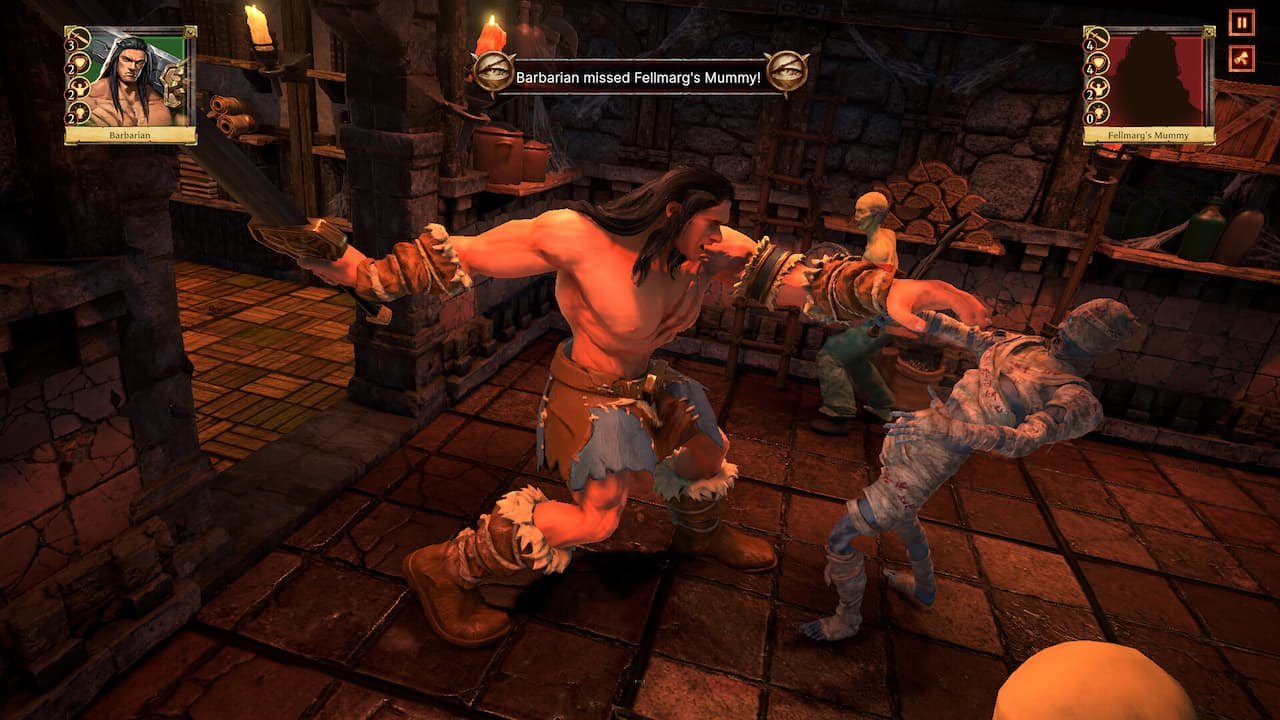
The combat is a hybrid real-time/turn-based system that gives you a timed window in which you can input a series of actions corresponding to your weapon set: the Sommerswerd, your on-hand weapon, your off-hand weapon, your ranged weapon, or your Kai abilities. You use a combat skill by clicking the appropriate region on the screen then selecting it from a radial menu. You can use as many skills as you like during your turn but some drain your limited reserves of endurance or Kai power (essentially magic in this world) and everything has a cool down timer associated with it. Once your turn is up you’ll have to wait for your next phase during which your endurance recovers.

Enemies may attack you at any time, seemingly at random. This is problematic considering that much of Lone Wolf’s combat relies on the order in which you activate abilities in an attempt to control the battlefield by crippling or killing foes at the right moment. Since there are no timers indicating enemy turn orders or action times, the whole thing sometimes amounts to guesswork; and on the higher difficulty levels you can get wiped out by what appears to be a lucky enemy rushing you during your recovery phase where you have no opportunity to effectively defend yourself. Add to this the fact that enemies can parry, dodge, or counterattack any time you attack them and you have a recipe for frustration. I suggest playing on easy, like I resigned myself to half way through the quest; it made combat much more manageable in the late stages.
Much like Lone Wolf’s writing, its combat is also a bit too conspicuous. You’ll end up in a confrontation once every few pages and many times I found myself sighing at the crossed swords on the page signifying an impending fight, and wished they would let the story get on with it.
There are also choices to make here: some of which will lead to a lock-picking minigame, some basic puzzles, and some may even affect your upcoming combat by giving you a minor advantage or disability at the start. A lot of this was disappointing though, as unlike the original gamebooks, none of it seems to effect your progress through the story in any meaningful way. No branching story paths here. There’s an occasional alternate route but that’s about it. At the end of each chapter and act those choices do at least serve to increase your stats depending on the general discipline you practiced (strength, intelligence, or dexterity) which is interesting but does little to add to the weight of those choices.
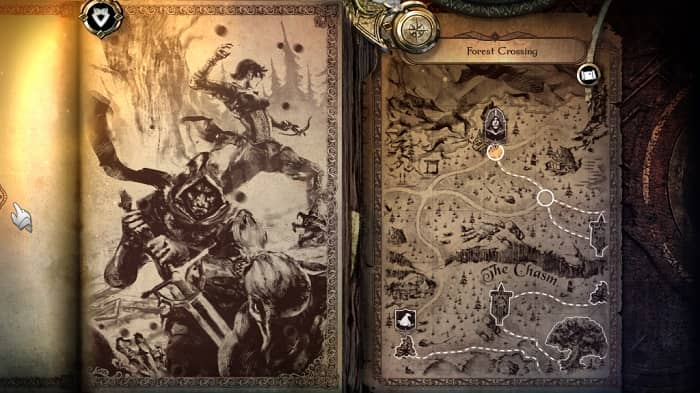
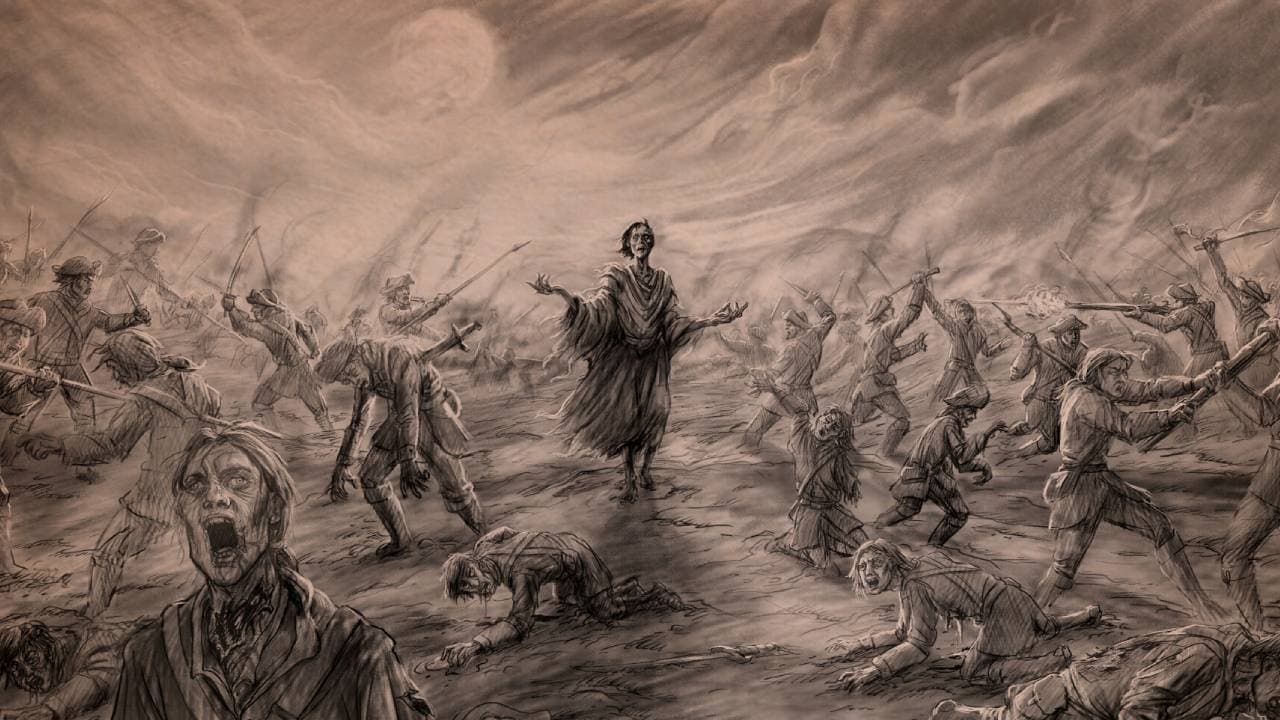
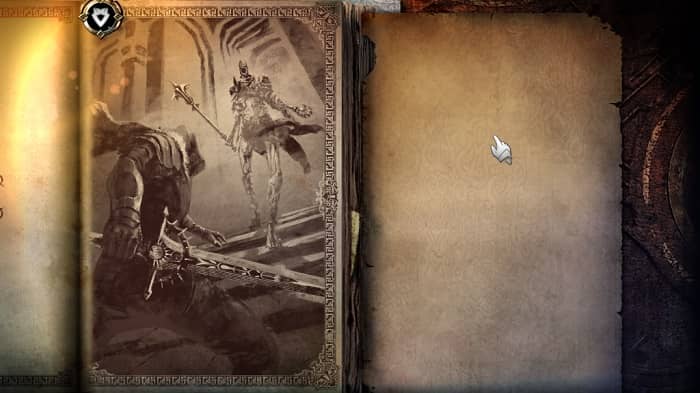
The primary saving grace of Lone Wolf is that for a mobile game ported to PC and given a quick and dirty up-res, it’s actually quite a looker. The story book that serves as your portal to the world has beautifully colored and animated pages that appear to be aged and possessed by some sort of magic which splashes ink across them as each one comes in to view. At key moments you will also be treated to some beautiful hand-drawn illustrations that do a great job of setting the scene. The combat sections also look great with a strong sense of art direction standing out above the low-poly models, stiff animations, and limited backgrounds. Altogether the presentation does an admirable job of conveying a living world inside the pages of this book and Forge Reply deserves nothing but praise for not phoning it in. Lone Wolf was clearly a labor of love for them and it shows.
I know it seems like I’ve been awfully critical of Lone Wolf HD throughout this review but perhaps that’s because I have so much invested in it. I loved these books when I was a child, and coming back to this story was like visiting the home of an old friend whose only become more interesting with age. Unfortunately he’s also long-winded, needlessly confrontational, and leaves you with something less than a sense of satisfaction. Still, I did enjoy my time with him and when he extends his next invitation I’ll gladly come over and hear another of his stories. Hopefully he will have improved as much between now and then as he did during his previous absence.

Joe Dever’s Lone Wolf HD Remastered is available on PC.