
The Five Best Soulcalibur Games of all Time

Top five Soulcalibur games

First released over 20 years ago, the original Soul Edge was the unlikely prologue to an entire series of beloved fighting games. Bridging the gap between games like Samurai Showdown and Tekken, Soul Edge and the many Soulcalibur games after it let players use weapons in fights that were more elegant than your average hand-to-hand brawler.
Instead of focusing on fast button combos, Soulcalibur has always been a rock-paper-scissors style game of wits between players as they juggle high and low horizontal and vertical attacks. Its more streamlined tactical approach towards its gameplay also helped it gain a balanced group of hardcore and casual fighting game fans.
Now, nearly six years after the last numbered game in the series, Soulcalibur is back. Not just another entry in the series, however, Soulcalibur 6 means to take the franchise back to its roots. To celebrate, we’ve decided to finally set the record straight: here are the five best Soulcalibur games of all time!
Soulcalibur V
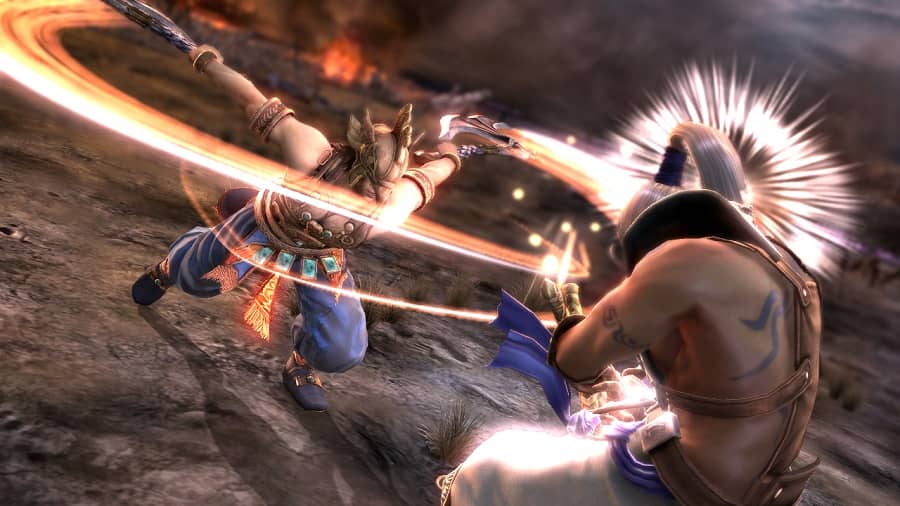
An unconventional pick, sure, but I’ve often contested that Soulcalibur V has never quite got the fair shake it deserved. Its many detractors may tell you that the game’s new characters failed to carry the torch of their predecessors, which they’re correct to say, but Soulcalibur has always been more than just its character roster.
Coming packed with the most robust character creator in the series yet, Soulcalibur V was a faster-paced and more visceral version of what had come before, thanks to its “critical edge” system. And while you can say what you will of its story, its presentation was undeniably better than any we had seen in the series at the time. I’ll leave it up to you to decide if Ezio from Assassin’s Creed II is a better guest fighter than a pair of Star Wars characters, though.
Soulcalibur III
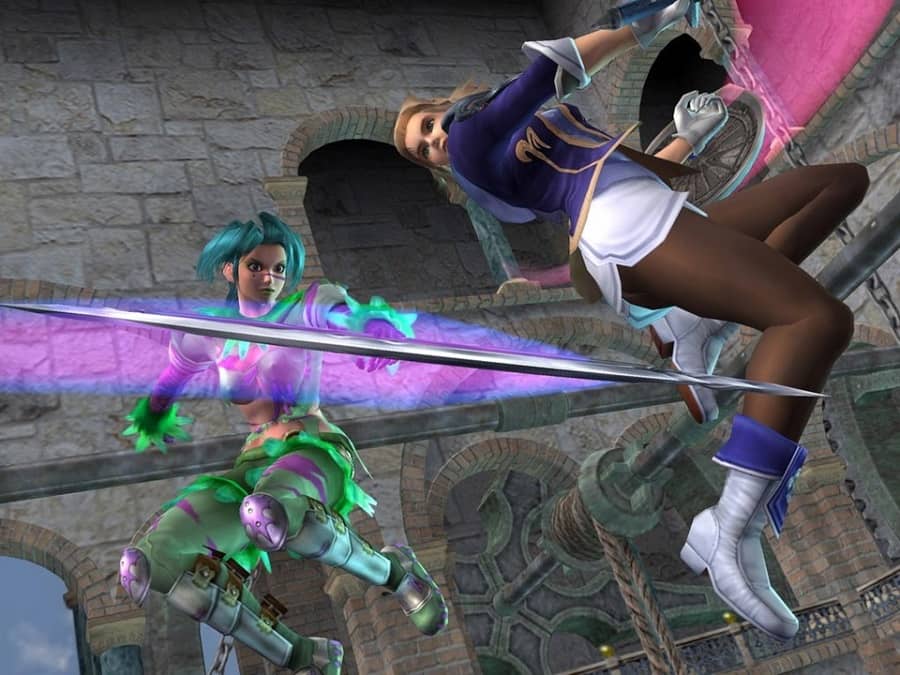
Soulcalibur III, which was one of the few games in the series to be released exclusively on one console (PS2 in this case), was skipped by a lot of folks. What they missed, however, was one of the most integral steps forward for the series, as it began to adapt and change for a new generation.
The first game in the series to implement the character creator, Soulcalibur III also offered the “Tales of Souls” mode which put a narrative twist on the series’ classic “Edge Master” mode. Introducing three new characters in Setsuka, Tira, and Zasalamel, it also offered the most diverse set of weapon techniques in the game, arguably creating the most robust complete package in the series to date.
Soul Edge
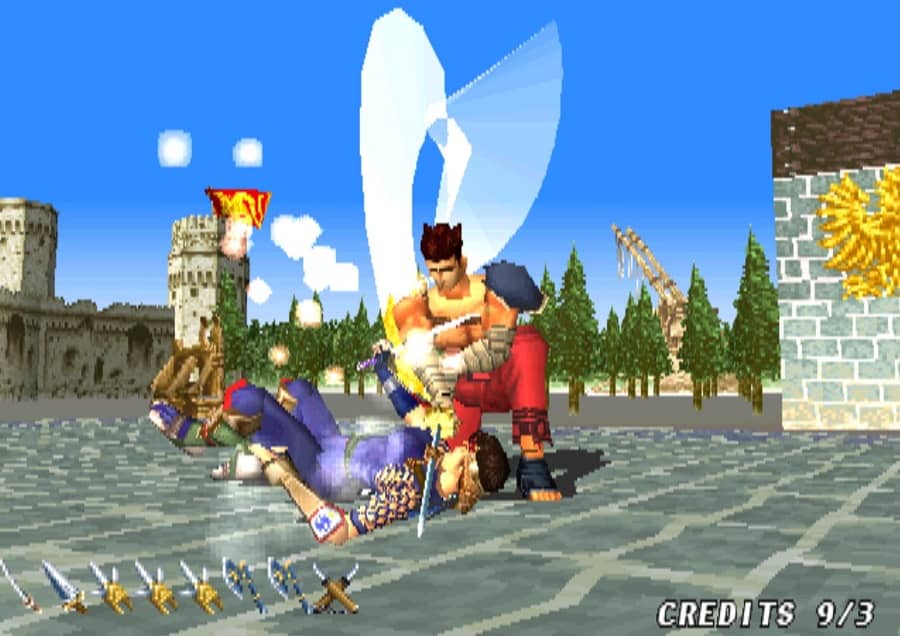
The original Soul Edge, or Soul Blade, as its known in the west, is where it all began. Released originally in 1996 for Japan and 1997 in the rest of the world, Soul Edge was one of the earliest 3D games in the genre. Sharing the stage with countless classics, few were as unique and impactful as it was.
Much more like Namco’s other 3D fighter Tekken than its eventual sequels would ever be, Soul Edge existed before the series’ famous 8-Way Run and instead had players tapping up or down to move along the Z axis. It also gave each character’s weapons their own life bar that, if was depleted entirely, would shatter the player’s weapon and force them to fight bare-handed. While many of its mechanics wouldn’t make the transition to Soulcalibur, it nevertheless is still one of the most distinctive games in the series today.
Soulcalibur
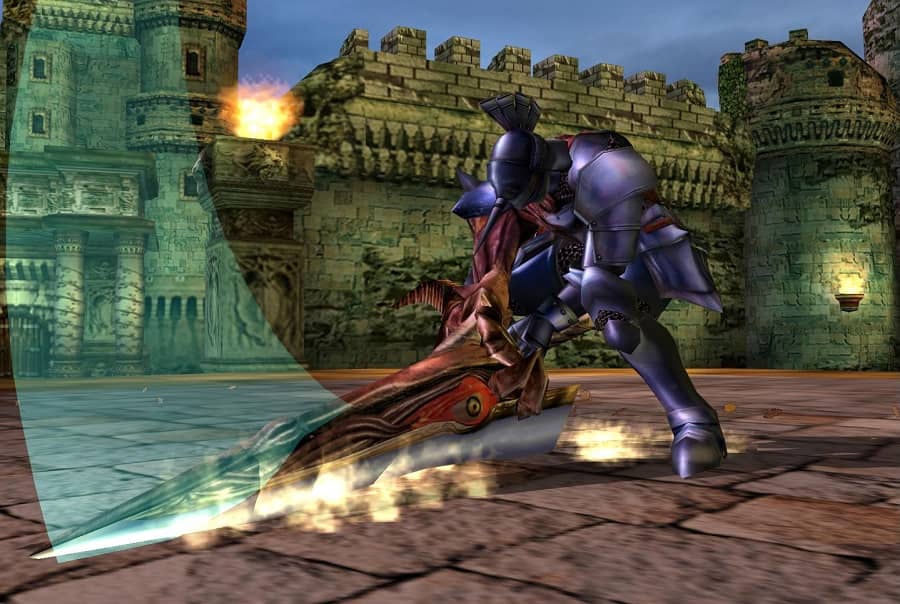
If Soul Edge opened the door, Soulcalibur kicked it down. The weapon-based fighter initially released in arcades in 1998, becoming a Sega Dreamcast launch title in 1999 afterwards. Remembered as one of the first console games to visually outperform its original arcade version, the original Soulcalibur was also a hugely important fighting game in and of itself.
Establishing the series’ 8-Way Run that allows players to move with eight degrees of freedom in 3D space, Soulcalibur offered an unprecedented level of movement for a 3D fighter that still is rarely matched. It also offered a relatively liberal buffer requirement, as opposed to many other fighting games at the time, which gave more casual players the ability to chain attacks together, a task usually only able to be performed by high level players. It also introduced a plethora of new characters, all of whom have become series staples since.
Soulcalibur II
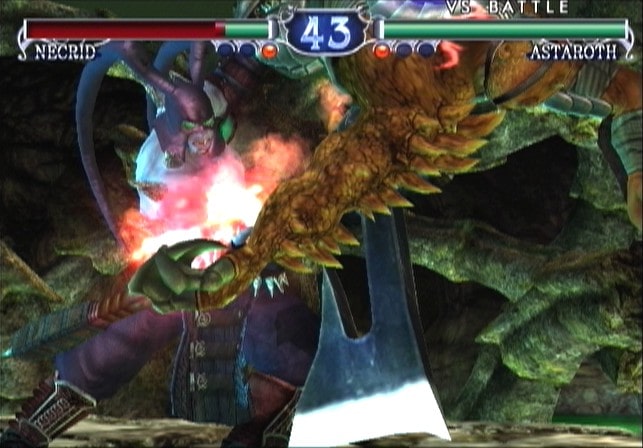
While its true that many games in the series could be called the best, at the end of the day there’s been one game responsible for more personal restless nights than the rest. Staying up until the sun peaks over the horizon as I play round after round against my friend on the couch, struggling to keep my eyes open for that last swing of the sword, it is of course Soulcalibur II.
Soulcalibur II is inarguably the most iconic game in the series, and with good reason. Besides offering unique characters on every specific platform of release, it also perfected many of the aspects that the original Soulcalibur introduced. With partly walled arenas, the revamped Guard Impact system, new Guard Break attacks, and the Soul Charge system, Soulcalibur II was not only a more in-depth fighter than its predecessor, but it was also a more balanced one while still retaining its approachability for casual fans.
Even now, sixteen years after its original release, Soulcalibur II still holds its place as one of the greatest fighting games of all time.


